
Comments Off on Do Bad Things Happen To Punish Us?
“Doors are opening. The wait wasn’t punishment. It was preparation.” Why do we believe that bad things happen to us … Continue reading »
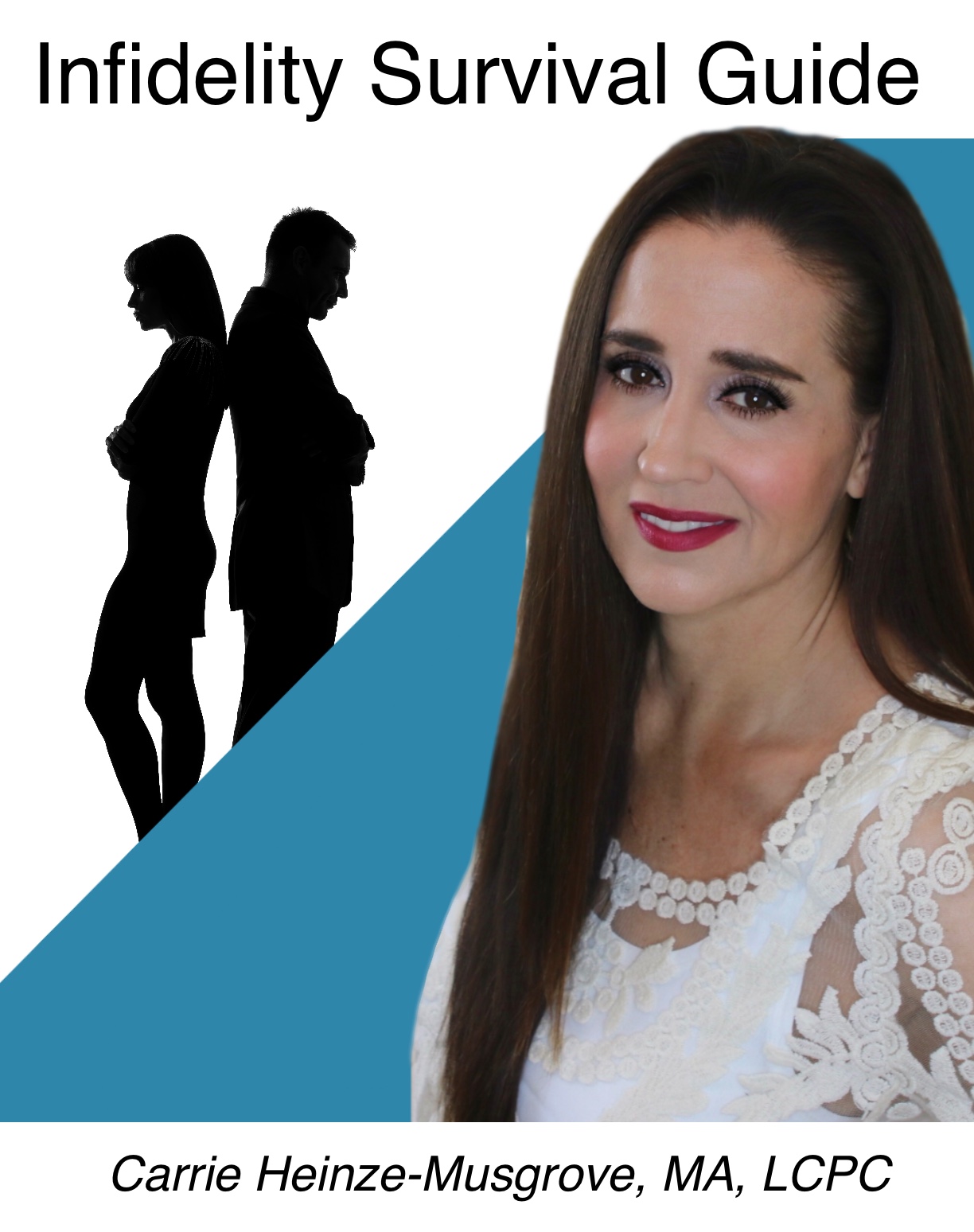
About the Author
Carrie Heinze-Musgrove is a Psychotherapist with 20 years of experience. Licensed in Texas and Illinois, she has extensive experience in both inpatient and outpatient settings.
Currently, she is in private practice concentrating on helping people who are struggling with relationships.
For more information about Carrie and her video conference-based therapy practice, visit www.carrienet.com or email carrie@carrienet.com.

To love is to give someone the ultimate power to hurt you. And to trust they won’t.
So it happened…
Shock. Rage. Denial. The feeling that your entire world has instantly changed. The sudden loss of the warmth and security you took for granted. Shame and self-doubt from not being good enough. Sadness over what you have lost. Anger from the deception and misplaced trust. Fear that you will never replace what you have lost. Those images playing over and over in your head. And pain like you have never imagined.
How can this be happening?
When your trust has been betrayed on a level such as this, the betrayal becomes the all-consuming focus of your thoughts. It can become the major factor in how you view yourself, how you view others, and how you function in your daily life.
Whether you want to save the relationship or end it, this much is clear: You cannot make good choices while your emotions are in control of your thoughts and your behavior.
Many relationships end after the discovery of infidelity. That is the reality. My purpose here is not to save your relationship, or even to help YOU save your relationship. Rather, my purpose is to help you find a place from which you can make the best choices for yourself. I want to help you understand what YOU DESERVE and to help you pursue it.
Many relationships do recover and flourish after infidelity. However, this does not happen in a state of fear, anger, self-doubt or hurrying the process. Perhaps you have already heard the words “it’s already done” or “why can’t we just move on?” I assure you, it’s not that simple. Rushing the healing process will not heal anything.
You may find, even after some time, you are constantly reliving the details of the affair. It is not at all unusual that you are investing your whole being into trying to understand it, rationalize it, comprehend it and figure out what this means for you and your life.
Here are some questions to ask yourself about how you are coping right now:
Are you:
If, after some time, these issues are still interfering with your life and your happiness, then it’s probably time to think about a strategy with which to move forward.
We are all different. There is no deadline you have to meet regarding your own emotional health and well-being. So don’t set one. And don’t let anyone else set one for you. Instead, start to recognize the things you can control and make a conscious effort to change those that are holding you back.
Nothing about this is a one-size-fits-all solution for what you are going through. Such a solution does not exist. However, here are some tools to help you begin to cope, and to help you through a very difficult process.
You are fully capable of finding your way through this.
I promise you.
1. Know that your feelings are valid.
An important part of regaining your self-confidence is to understand that the emotions you are feeling as the result of your betrayal are normal. Viewing your emotions as unjustified or irrational (or being told this) can prevent you from taking action to make things better.
You feel how you feel. Your feelings are neither right nor wrong. Your feelings are affected by how you think and negative thoughts produce negative feelings. If you can’t get the unceasing, obsessive thoughts about the betrayal out of your head, of course you feel awful, confused, hurt, ashamed, helpless, angry, heartbroken, lonely and so forth.
Rarely do you experience one feeling at a time. Feelings are most often mixed. Thus, the ups and downs you are experiencing are completely normal. You do not have to explain yourself and you do not have to apologize for your feelings. You can’t control how you feel. You can only control how you act and respond.
Struggling with obsessive thoughts does not mean your character or morals are lacking. Anxiety stimulates obsessive thoughts and we obsess because we are afraid. The world as you know it has been shattered. Your belief system has been shaken and questioned. Your future has become unknown. It’s easy to worry about the same things over and over again.
Unfortunately, the healing process doesn’t happen overnight. It’s common to think you are doing well and think, “I got this” only to be ambushed by hurt feelings, paralyzing guilt and resentment. Only you are qualified to say how long it will take.
Another important piece to knowing your feelings are valid is to know what constitutes an affair or infidelity. Ask yourself this…Are you acting in a way so that your affection and loyalty are committed and dedicated to one person to whom you vowed all of your affection and loyalty? If your answer is no, then it may be an affair. The signs of an emotional affair may be more subtle than those of a sexual affair, but are very real.
“But it was only _____”
When most people think of cheating, the first thing that comes to mind is sex. However, cheating comes in many forms. Having a phone affair, cyber cheating, flirting, sharing private thoughts and feelings, denying being married, texting, sexting, emailing, an opposite sex BFF, a kiss, a touch, a one night stand, sexual innuendos, pornography or an emotional connection with someone else can all cause major, major problems in your relationship.
This, of course, doesn’t make physical infidelity any better or worse than emotional infidelity. They all hurt. But it does raise the question of what, exactly, constitutes as cheating.
In any relationship, what one person considers to be acceptable may differ than what their partner deems appropriate. And to make things even more confusing, many people do not like to define what counts as cheating. By keeping the rules vague and ambiguous, it makes it easier to do what you want. If you don’t know that the rules are, you can’t really break them.
Secrecy is a good litmus test to answer the question “what constitutes cheating?” If whatever you are doing needs to be kept secret, no matter how ‘innocent’ you may think it is, you are on a slippery slope. If someone is going out of their way to cover up things or if you are ever in a position where you think, “I’m glad my partner isn’t seeing this,” then you’ve already crossed a line. If it feels funny, weird upsetting or unsettling, that’s because it is.
Infidelity does not come with a chart that lines “degrees of betrayal” up against an appropriate emotional response. There is no point system. Only you know the extent of the emotional damage that was caused by the betrayal. Again, you feel how you feel. You do not have to explain yourself and you do not have to apologize.
2. Know what to expect.
You are on a roller coaster and it will be that way for a while. But it will ultimately get better. Knowing that the ride eventually ends can help you cope. Also, avoiding some pitfalls that tend to serve no purpose other than prolonging the journey can be helpful.
Healing requires hard work to confront all the necessary issues. This takes time. Although this may make you cringe, a year or two or longer to recover from infidelity is not unheard of. In many cases it is necessary, depending on the depths of the betrayal. It is often compared to losing a loved one. In a way, it is. It is the death of the relationship as you perceived it.
During this time you may swing back and forth from hating your partner to desperately wanting them to hold and comfort you and make everything better. It can be a crazy gamut of emotions.
Although people naturally want to be pain-free as quickly as possible, when it comes to healing from infidelity, it just is not going to happen. A quick recovery typically means that things have been swept under the rug.
Here are some steps to help you navigate the grief process.
3. Recapture what you sacrificed.
It’s painful to realize that when you committed to the relationship you sacrificed parts of who you were. Maybe you gave up time with family and friends. Perhaps you put your career goals on the back burner. You may have even moved away from what you once called home. You committed to what you thought was forever and, in fact, it could actually end today.
Now is a good time to refocus on your life away from your partner. You should think about the things that YOU enjoyed and that made YOU happy before the relationship.
Can we control our partner? No. Can we our own actions and behaviors? Yes. So, this is the part we work on.
Ask yourself:
Motivating yourself to make changes at this point might seem overwhelming. Start with baby steps. Think about what you used to enjoy and begin to reclaim it.
4. Re-imagine your future.
An affair can drag you into a hole of negative thinking, indecision and inaction. It can rob you of drive, motivation and sense of joy, and wallowing around in it is self-defeating.
Take this opportunity to re-imagine your life. Yes, you might hold out hopes for reconciliation with your partner, but what if that isn’t in your future? What changes in your life will make you happy, whether you end up single, or not?
What kind of partner do you really want? What kind of partner do you want to be? Have you learned anything from this relationship that can help move you towards that? Can you think of things you would like to change or improve to move in that direction?
Becoming more confident that your life can be amazing whether or not your relationship survives will help you cope and it will put you in a better position to make choices for the right reasons.
Dream for yourself and act in ways that move you closer to those dreams. Believe in yourself. Are there things you used to imagine for yourself before this relationship? Do you want more from life than this relationship was allowing you to have? Would being less dependent on your partner be a good thing?
Ask yourself what you stand for; what you’re passionate about and how you want to leave an impression on the world. What sacrifices have you made in your life that you regret, what did you do that you weren’t proud of, what didn’t you do that you wish you had?
What classes, experiences, support, or interactions do you need to help you be the person you wish you were? Figure it out, and start working towards it – work towards the life that you deserve to have.
5. Talk to a Therapist.
Therapy is one way of getting control back. You’re not only working on yourself, but you’re developing tools to help you work on your future. One great benefit of therapy is that it not only helps you understand yourself, but it helps you understand other people. When we hold on to negative thoughts, they become so ingrained that we only see them through that lens. Therapy is learning to get through the clutter.
If a reconciliation attempt is in the future, it could be the best thing for the relationship is for both of you to attend counselling together. It is important to remember, however, that your decision to get help is not dependent on your partner’s willingness to do so. Don’t wait until your partner agrees to seek therapy. Many couples in troubled relationships simply wait too long to get help. By the time both partners agree to therapy, the relationship has often been damaged to the verge of collapse.
If you can’t get your partner to agree to therapy, it may be preferable that you attend by yourself. Stop spending your time convincing them to go. A therapist can give you honest feedback and help you find effect ways to communicate your feelings and needs.
If you want reconciliation, then it is important to understand the goal. The goal isn’t to change your partner. The goal is to gain insight into your role in the dysfunctional pattern. One partner is never 100% of the problem. Even in relationships where only one person has strayed, oftentimes both members bear the responsibility for an affair. “No one forces you to cheat” but the wronged party must also acknowledge their own role in fostering an unhappy union, however minuscule. Therapy will help you learn what you really want and healthier ways to communicate it. It will help you understand what you deserve from the relationship and how to set effective boundaries moving forward.
Infidelity is devastating and emotions will run high while you struggle through the various phases. Don’t lose hope. You will survive. And remember that you do not have to fight this battle alone.
Carrie

“Doors are opening. The wait wasn’t punishment. It was preparation.” Why do we believe that bad things happen to us … Continue reading »

Closure is overrated. There are some things that happened where we just don’t get “closure”. Work on accepting what they … Continue reading »

One in eight people around the globe live with mental health conditions. The COVID-19 pandemic caused a 25% increase in … Continue reading »